


The short answer
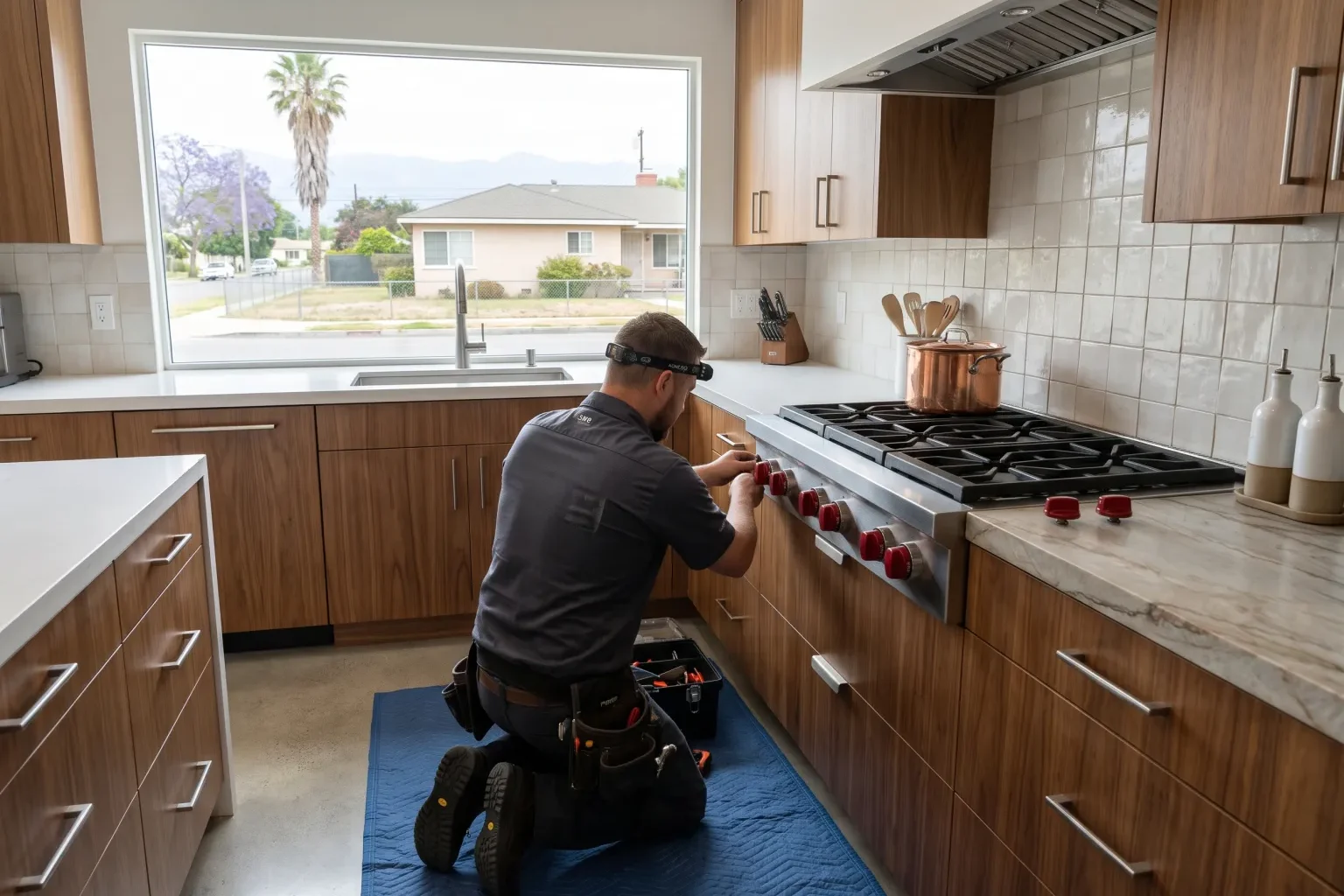
Most high-end cooktop problems come from a small number of parts: igniters, spark modules, burner caps and ports, valves, thermal sensors, and induction control boards. Our technician tests the cooktop in place, finds the failed part, and tells you whether a repair makes sense before any work starts.
A cooktop that won't light, won't hold a simmer, or shows a code on its glass can stop dinner in a busy kitchen. Sub-Zero Appliance Experts repairs built-in and professional-style cooktops in North Hollywood and nearby areas, including Studio City, Valley Village, Toluca Lake, Burbank and Sherman Oaks. Many of the kitchens we work in pair Sub-Zero refrigeration with a Wolf, Viking or Thermador cooktop, and we service all of them. We are an independent repair company, not affiliated with any appliance brand. If you smell gas, turn off the appliance's gas supply if you can do so safely, leave the house, and call your gas utility before you call us.
Issues we fix
Owners usually call about one of the problems below. Note when it happens, which burner or zone is affected, and any code shown on the display. That information shortens the diagnosis.
- Burners that won't ignite, or that click but never light
- Constant clicking after the burner is already lit
- Weak, yellow, lifting or uneven flames
- A burner that goes out on low or won't hold a steady simmer
- Uneven heat across a pan or one zone running much hotter than the rest
- Induction zones that don't detect the pan or shut off partway through cooking
- Error codes, flashing lights or an unresponsive touch control panel
- Electric radiant elements that stay dark or only heat part of the ring
- Knobs that are loose, stiff or don't line up with the flame level
- Cracked or chipped glass and ceramic tops
- Tripped breakers or blown fuses when the cooktop is switched on
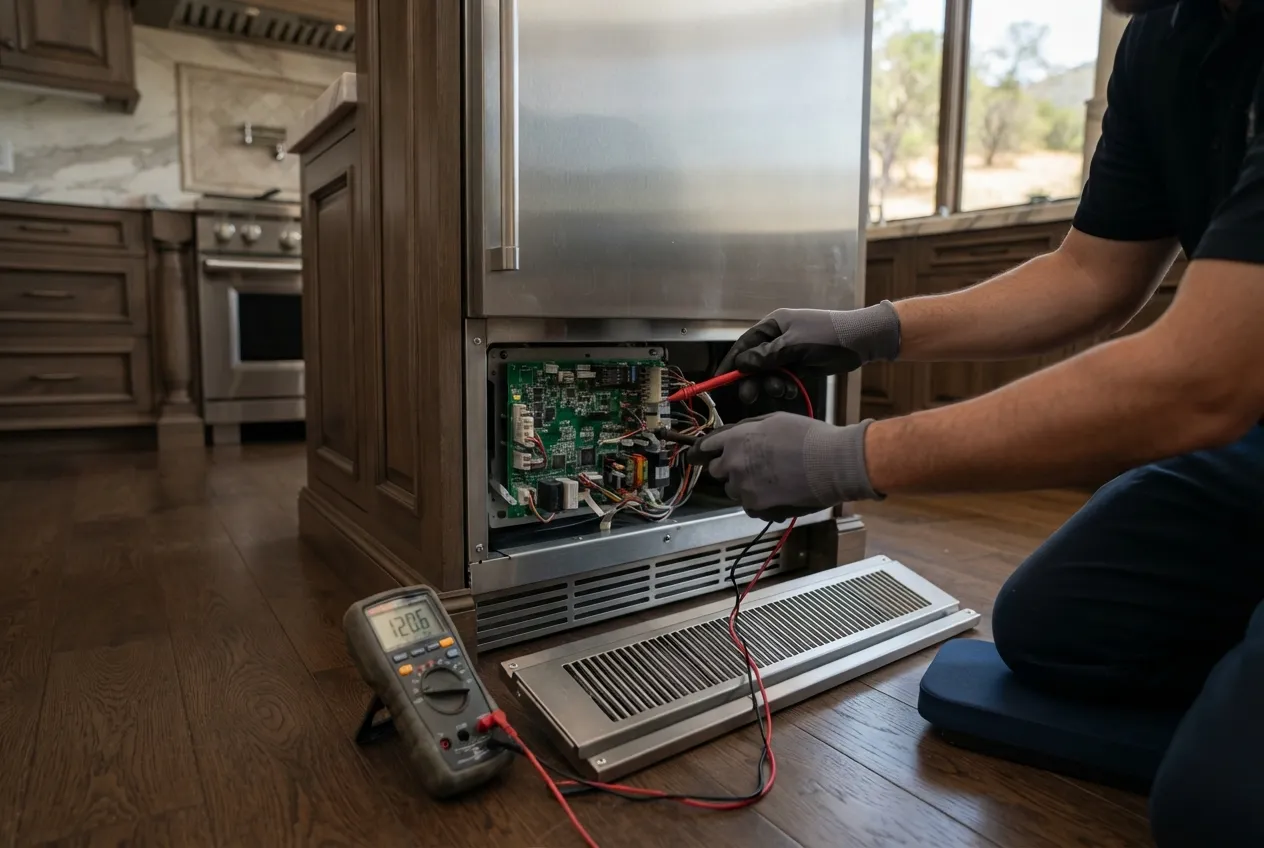
What our technician checks on a built-in or professional-style cooktop
On a gas unit we start with the parts you can see: burner caps, heads and ports. Spills and cleaning residue often block ports or keep a cap from seating, and that alone causes uneven flames or failed ignition. We then test the igniters, the spark module and the switches behind each knob, check the gas pressure at the burner, and confirm each valve opens and closes smoothly. Burners that relight automatically get the reignition circuit checked as well.
On induction and electric units we read any stored fault codes, test the power supply and the incoming voltage, and check the control board, the touch panel, cooling fans and temperature sensors. Induction cooktops shut themselves down when they run hot, so a blocked vent or a failing fan can look like a board failure. We also confirm the cookware works with induction, because some pans aren't magnetic enough to be detected. Before we leave, we run every burner or zone on high and low.
How Wolf, Viking, Thermador and Sub-Zero kitchens differ
Sub-Zero makes refrigeration, not cooktops. In a Sub-Zero kitchen the cooktop is usually a Wolf, built by the same company, or a Viking or Thermador unit chosen to match the design. Each brand has its own engineering, and that changes where we look first.
Wolf gas cooktops use dual-stacked sealed burners: an upper ring for high heat and a lower one for simmering. When the low setting stops behaving, we check the lower ports, the cap fit and the valve before anything else. Wolf induction and electric models are controlled by electronics, so codes and sensor faults come up more often than mechanical wear.
Viking's professional-style gas cooktops have heavy grates, high-output burners and spark ignition with automatic relighting. Common calls involve worn igniters, failing spark modules and switches that keep clicking after moisture or spills get into them.
Thermador gas cooktops are known for the star-shaped burner, which has a lot of ports to keep clean, and for a very low simmer setting that cycles the flame on and off. Some owners think that cycling is a fault when the burner is working as designed. Thermador induction models get the same electronic checks we use on any induction top.
Tell us what your appliance is doing.
Repair or replace a high-end cooktop
A premium cooktop is built to be serviced, and most faults are a single part: an igniter, a spark module, a valve, a sensor or a board. Replacing a built-in cooktop also tends to cost more than the appliance itself, because the new unit has to fit the existing cutout, gas or electrical connection and countertop. A different size or layout can mean cutting stone or reworking cabinetry.
Replacement starts to make sense when several major parts are failing at once, when the parts you need are discontinued, or when a glass top is badly cracked and the unit is older. If you're already planning a remodel, that matters too. We'll explain what we found and give you an honest recommendation either way.
What affects the cost of cooktop repair
We can't give you a price until we've seen the cooktop, because the price depends on what actually failed. Cleaning blocked burner ports and reseating caps is quick work. Replacing a valve, a control board or a full glass top takes more labor and more expensive parts.
Parts availability matters as well. Common parts for current models are usually easy to get. Older or discontinued models can take longer to source. Access is the third factor. Some cooktops lift out easily, while others sit in stone counters or custom cabinetry with tight gas and electrical connections underneath, and those jobs take more care and time. After the diagnosis, we'll explain the repair and its cost and get your approval before we start.
How a visit works
When you book, tell us the brand, the model number if you have it (usually on a label under a grate, on the burner box or under the cooktop), whether it's gas, induction or electric, and what you're seeing. That helps the technician bring the right parts.
At the appointment, the technician confirms the problem, tests the components involved and explains what failed. If the part is on the truck, the repair can often be finished on the same visit. If it has to be ordered, we'll schedule a return visit to install it. Before we leave, we test every burner or zone, check for leaks and correct ignition on gas units, and show you anything that will help prevent the problem from coming back, such as how to clean the burner ports.
Cooktop Repair by city
-
 Cooktop Repair in Burbank
Local service & repairs
-
 Cooktop Repair in West Hollywood
Local service & repairs
-
 Cooktop Repair in Beverly Hills
Local service & repairs
-
 Cooktop Repair in Glendale
Local service & repairs
-
 Cooktop Repair in San Fernando
Local service & repairs
-
 Cooktop Repair in Los Angeles
Local service & repairs
-
 Cooktop Repair in La Cañada Flintridge
Local service & repairs
-
 Cooktop Repair in Culver City
Local service & repairs
-
 Cooktop Repair in Santa Monica
Local service & repairs
-
 Cooktop Repair in South Pasadena
Local service & repairs
-
 Cooktop Repair in Pasadena
Local service & repairs
-
 Cooktop Repair in Inglewood
Local service & repairs